Software systems don’t keep information in one place all the time. When a user makes a request to the system, it goes from the application to a server. A database might store the records needed to process it. Also, other components may need to know about any changes.
You need to move data to connect all these separate activities so that they can work as a coherent system.
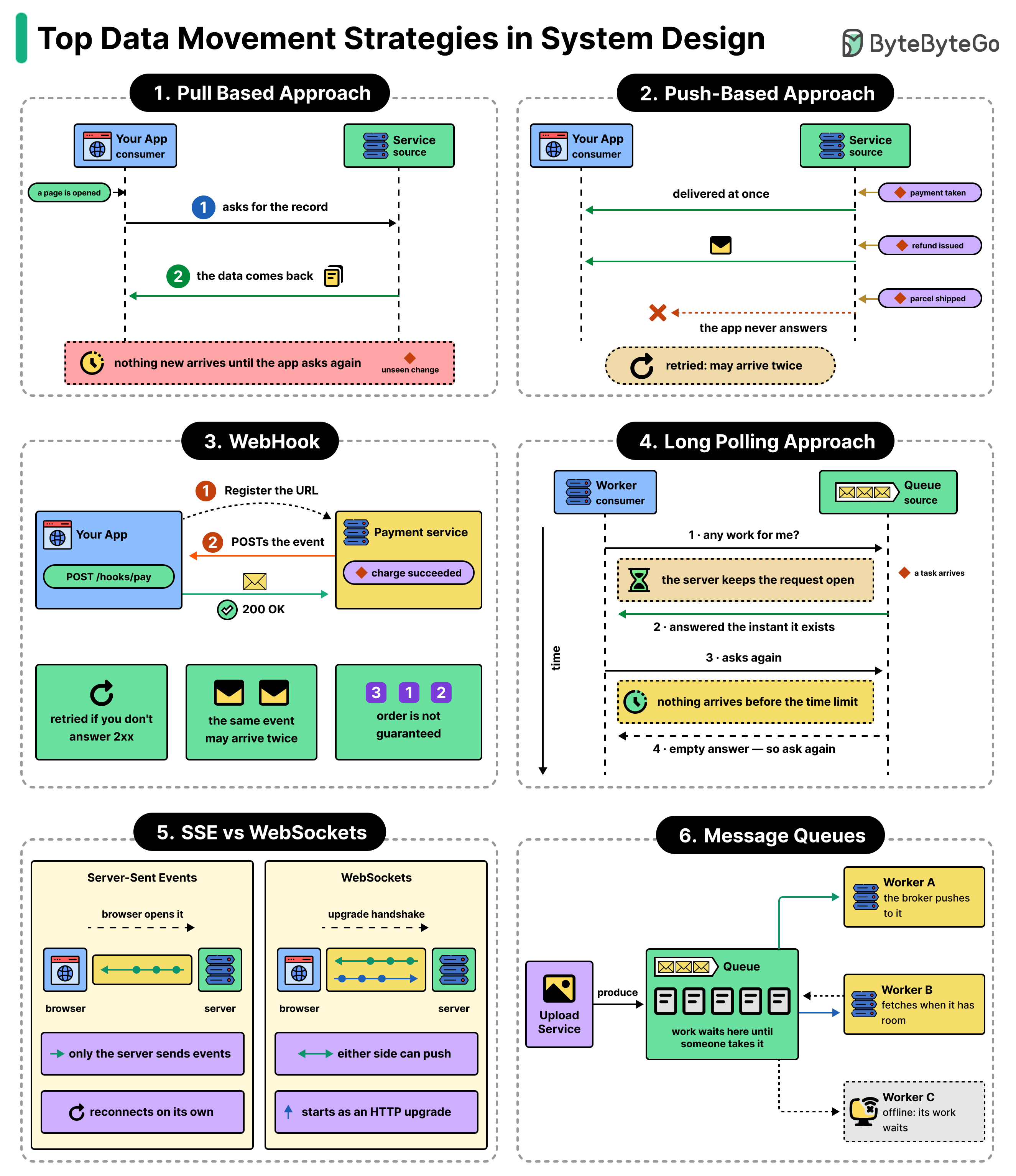
To manage this movement of data, you need to make decisions about when and how information should travel within a system and outside it. This is where you have multiple strategies that can be used to handle data movement. In this article, we’ll look at the key strategies of data movement along with their benefits. Here’s what we will cover:
The source, consumer, and trigger of data movement
What is the pull approach
The polling approach
The push approach
The long polling approach
Continuous communication with SSE and WebSockets
The role of message queues
Change data capture for database changes
How to choose a data movement strategy