A feature is deployed, and the database queries run well. The team is happy with the results. However, six months later, the main table has grown from 50,000 rows to 5 million, and the same query now takes eight seconds.
Then, someone adds an index, and read latency drops to milliseconds, which seems like a clear win. But a week later, the nightly data import is running 40% slower than before. Fixing one problem created another.
This is the central challenge of database performance.
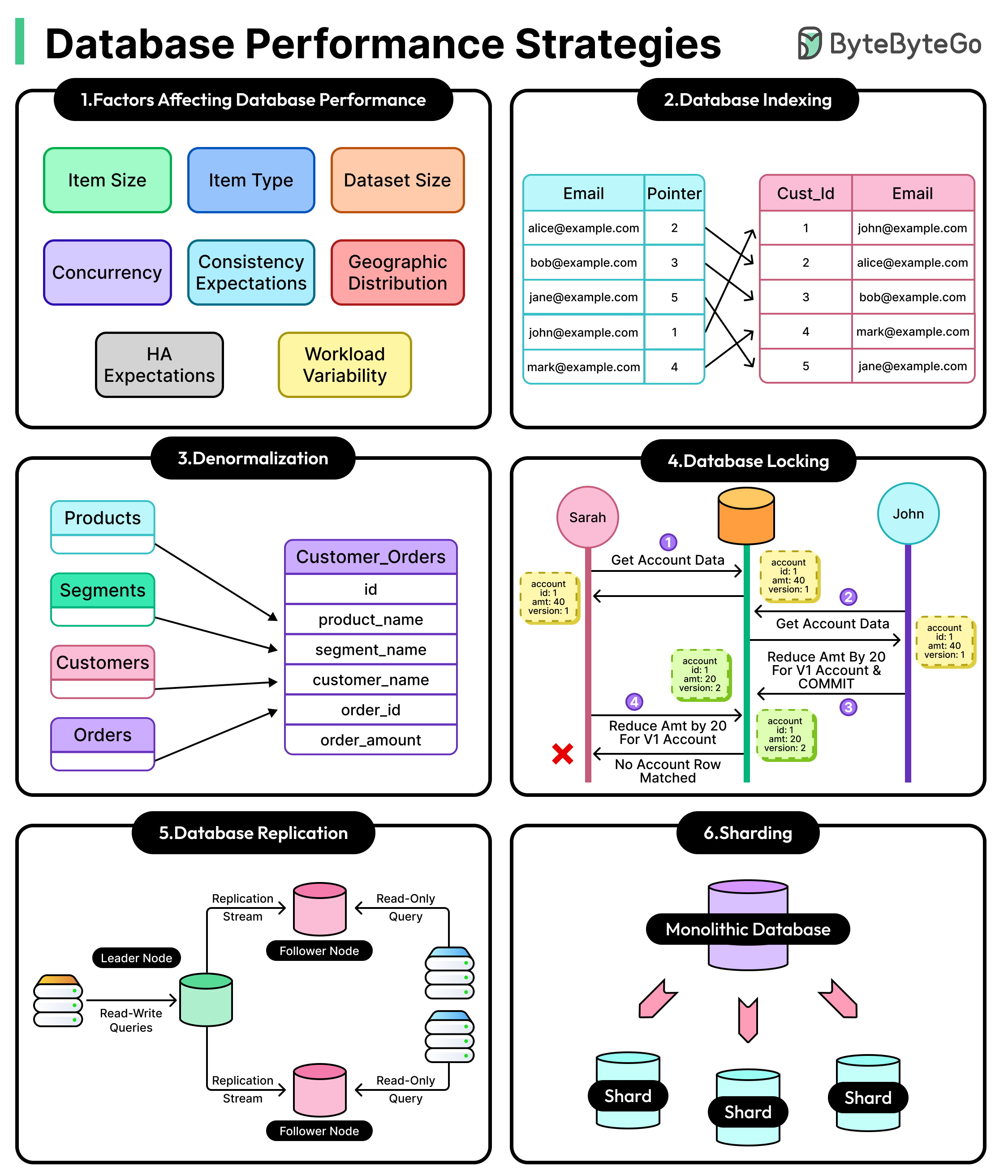
Every optimization helps one thing and can potentially hurt something else. Indexes speed up reads but slow down writes. Caching reduces database load but introduces stale data. Denormalization makes queries faster but complicates updates.
The real challenge isn’t knowing the strategies, but understanding what each strategy costs and deciding which tradeoffs a given application can afford. In this article, we’ll go through the major strategies for improving database performance along with their benefits and trade-offs.