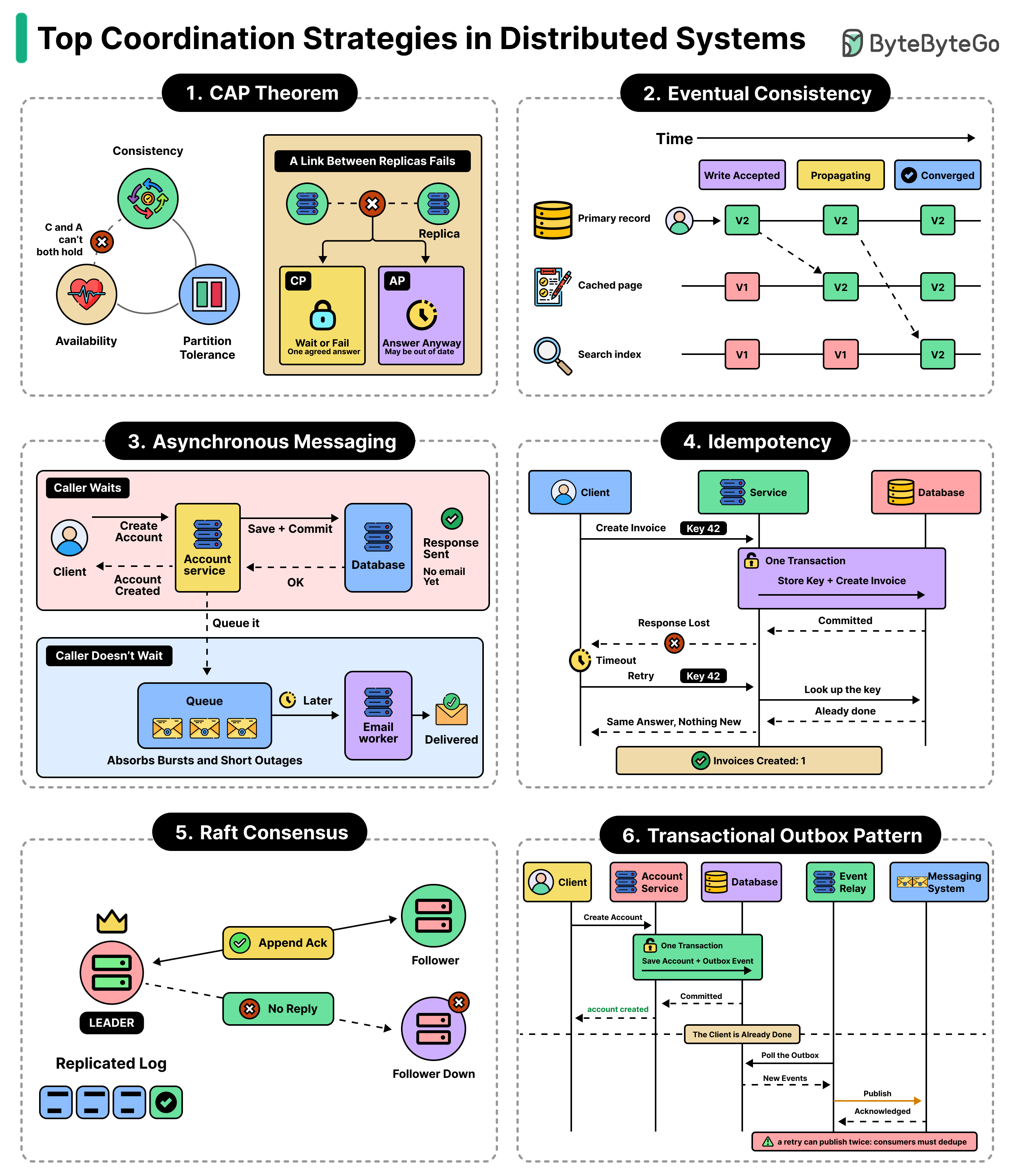
In a distributed system, you have components running in separate processes or machines. These components could be application services, database replicas, or even background workers.
Since in distributed systems, we divide the system into so many components, it’s pretty common that one component may need to talk to another component to get something done. It may also have to wait for the other component’s response. You can think of coordination as this talking between components. For example, you may have one service waiting for another service to approve a request. Or a database waits for acknowledgment from its replicas. Or a worker waits for a lock.
In this article, we’ll look at why coordination is a challenge for distributed systems. Here’s what we will cover.
Why coordination becomes a challenge
How coordination increases in a system
How to reduce coordination
Strategies to handle coordination